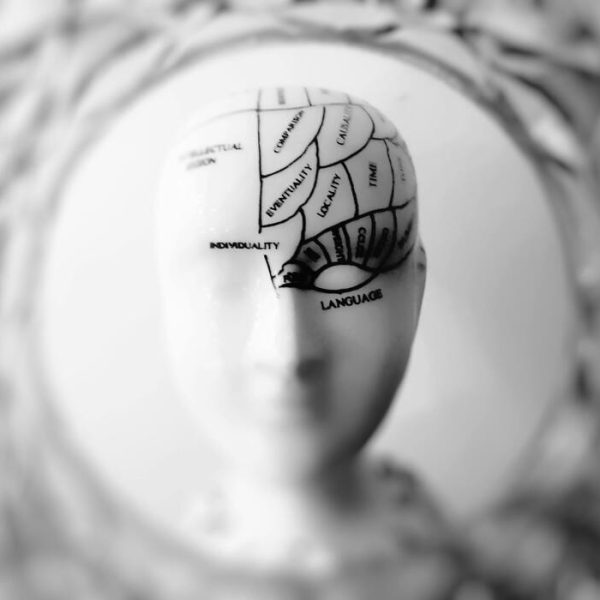
For decades, popular culture has told us that people are either left-brained and logical or right-brained and creative. The truth is more interesting and much more subtle. One of the most important sources of real knowledge about the two sides of the brain comes from split brain research, a set of studies that began in the middle of the twentieth century.
This article explains in plain language what those studies showed, what they did not show, and why they still matter. It is general education, not medical advice.
What is a split brain
The brain has two hemispheres connected by a thick bundle of nerve fibres called the corpus callosum. This bridge allows the two sides to share information almost instantly.
In rare cases, doctors cut this connection to control severe epilepsy that did not respond to other treatments. The surgery was meant to stop seizures from spreading between hemispheres, and it often helped. It also created a unique chance for researchers to study each side more independently.
Split brain research did not start as a plan to divide the mind, but as a medical decision that scientists later studied with great care.
How the experiments worked
Each eye sends information to both hemispheres, but what you see on the left side of your visual field goes to the right hemisphere, and the right side goes to the left. In these studies, researchers showed images to one side of the visual field only.
When a word or picture appeared in the right visual field, participants could name it, because the left hemisphere typically handles speech. When it appeared in the left visual field, they often said they saw nothing, yet the left hand could point to the matching object.
What scientists learned about language
The findings strengthened earlier discoveries that language relies heavily on the left hemisphere in most people. Clinical cases from the nineteenth century, including work in France on patients who lost the ability to speak, had already pointed in this direction.
The right hemisphere showed some understanding of simple words and was better at certain visual and spatial tasks, such as arranging blocks or recognising faces.
Attention, perception and action
Experiments also revealed differences in how each hemisphere deals with attention and perception. Participants could sometimes perform two tasks at once more easily than expected, because each side worked on a different one.
Yet in daily life, patients usually behave normally. The two sides cooperate through other pathways, shared senses and constant movement of the eyes and head.
What the research does not show
Split brain studies do not prove that people are dominated by one hemisphere or that creativity lives only on the right. Healthy brains use both sides together for almost every task.
The idea of left-brained and right-brained personalities is a myth. Research from institutions such as the National Institutes of Health explains how the brain's networks cooperate across regions.
Ethics and the human side
These studies involved real patients, many of whom took part voluntarily over many years. Researchers had a duty to explain their work, protect privacy and avoid dramatic claims.
The same principles guide neuroscience today: informed consent, respect for participants and honest reporting of results, including limits and uncertainties.
Why classic papers need careful translation
Much of the history of brain research was written in several languages, including French, German and English. Names of conditions, tests and brain regions do not always match word for word, and a poor translation can distort what a study actually found.
Universities and publishers often rely on professional French translation services to bring classic articles and new data into other languages accurately.
Research groups that share sensitive participant information also need strict privacy. This article on confidential translation services explains how confidentiality is protected during the process.
Modern tools for studying the brain
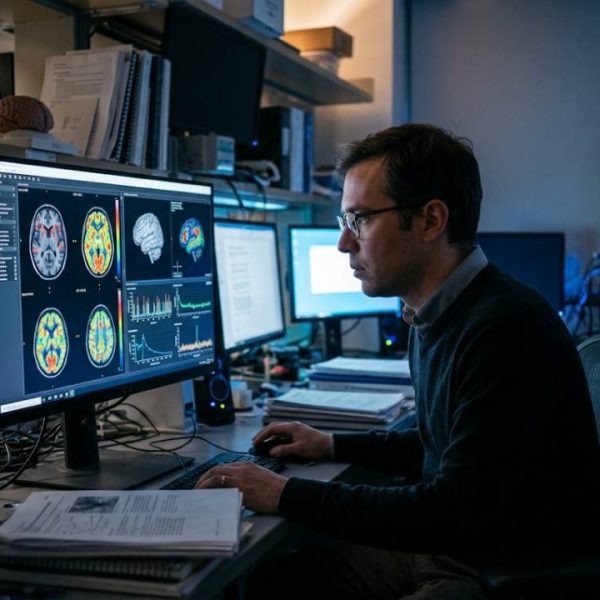
Today scientists use brain imaging, electrical recordings and computer models to watch networks work in real time. These methods show that thinking is distributed across many regions, with constant communication.
Behavioural studies remain important, because they link what people actually do with what happens inside the brain.
What this means for everyday life
You do not need to worry about which side of your brain you use. Learning, memory and creativity involve the whole brain, and habits such as sleep, exercise and curiosity support healthy function.
If you have concerns about your own health or memory, speak with a qualified healthcare professional rather than relying on popular theories.
The lasting value of split brain studies
These experiments showed that a single mind can involve parallel processes that do not always share information. They helped create modern ideas about specialisation, integration and how experience is assembled from many parts.
The story is a reminder that careful research often overturns easy slogans, and that real understanding is built slowly, one experiment at a time.